
Cutting Down A Tree in Seattle
The permits, struggles, and the reward

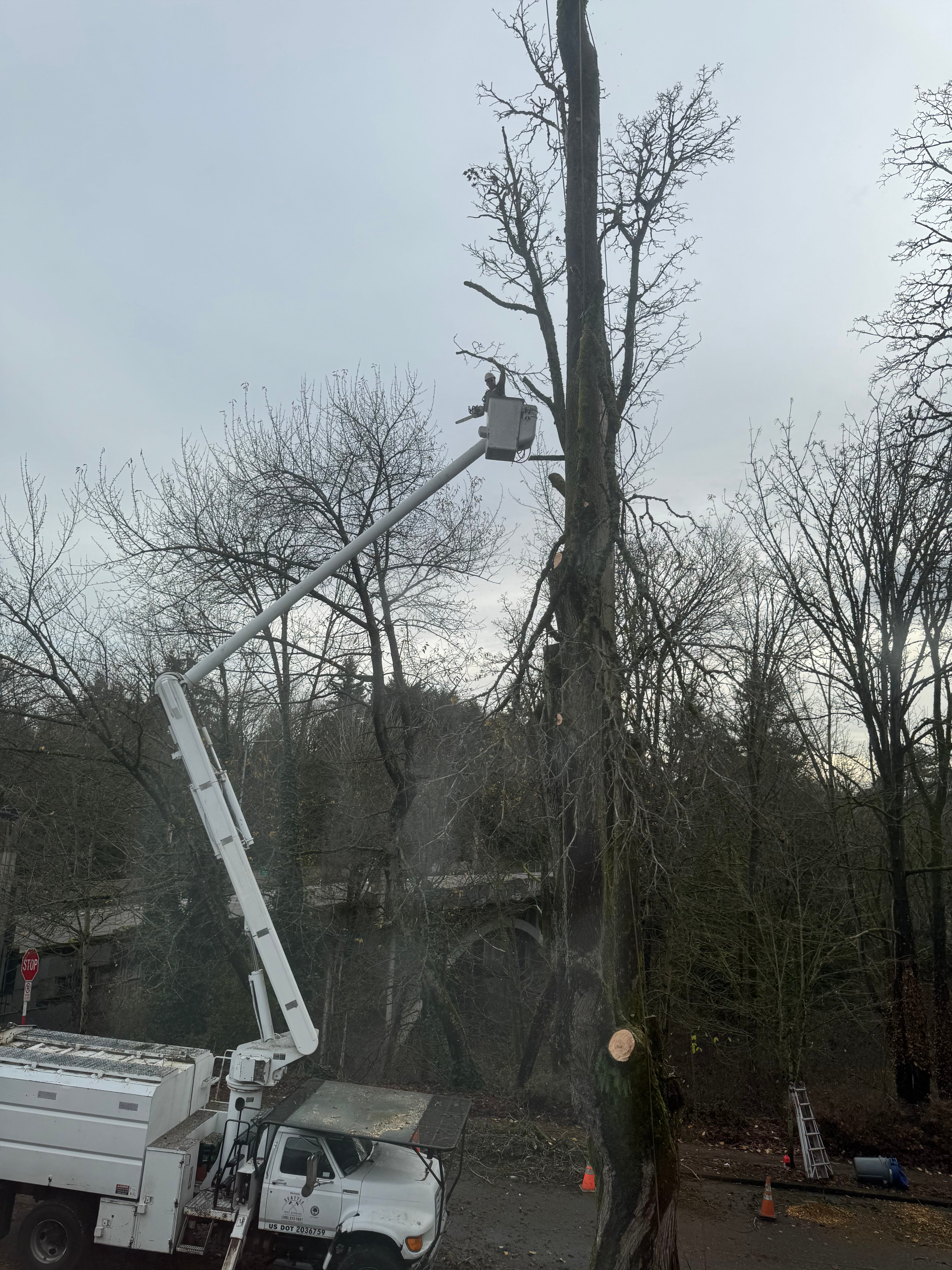
We all know that getting anything done in Seattle can take a fat minute. After passing regulations, submitting permits, and actually accomplishing the project, it will have been months since you first decided to get it done.
We are personally going through one of these drawn-out processes with the removal of an 80-foot maple tree in our front yard. The tree was planted on the road verge by the city over 100 years ago. However, although it was planted by the city and is on city property, the city has made it our jurisdiction to take care of—funny how that works. Now, a century later, the tree is in dire health, and we need to take it down. What’s the process?
Seattle is atrocious when it comes to accomplishing any type of project, even if it’s on your own property. Though it feels like a major encroachment on personal property rights, the city has the authority to require Seattleites to obtain permits for fifteen different types of “common projects” (ADUs, fences, garages, decks, etc.)1. Land projects also require permits, such as excavating a hole larger than five feet or 100 cubic yards, filling any hole deeper than three feet or 100 cubic yards2, and, in our case, removing trees greater than six inches in diameter3.
A friend of ours, Mike Stanton, has been running an arborist company since 1989, when he took over the business from his father, who started it in 1948. Over the years, Mike has seen permits gradually become more restrictive and more common. He told us the permitting process has become such a headache that he is hesitant to work in Seattle at all. However, he was willing to help us and cut our tree down once the permitting was finished.
Last December, we were prompted to deal with the tree when a major limb fell during a windstorm. Shortly after the branch fell, we contacted the city to ask permission to remove the entire tree. We were answered—surprisingly—fairly quickly, when a notice was posted on the tree announcing that it was eligible to be cut down.
Once we were actually ready to fell the tree, we went back to the city to obtain the final permit, and the inspector changed her mind about the project. Initially, we were allowed to cut the tree down to the stump, which would have been much cheaper and still accessible to wildlife (if that card needed to be played to appease the neighbors). However, when we approached her again, the inspector stated that we could either remove the entire tree and grind the stump, or cut out twenty-five percent of the canopy for stabilization. With this entirely unsuitable response, we were left with a quandary.
Removing the entire tree and grinding the stump would be nearly three times as expensive as we had expected, and if the curb cracked because of the stump, we would be responsible for fixing that as well. On the other hand, removing twenty-five percent of the canopy, as Mr. Stanton informed us, would make the tree far more unstable and more of a hazard.
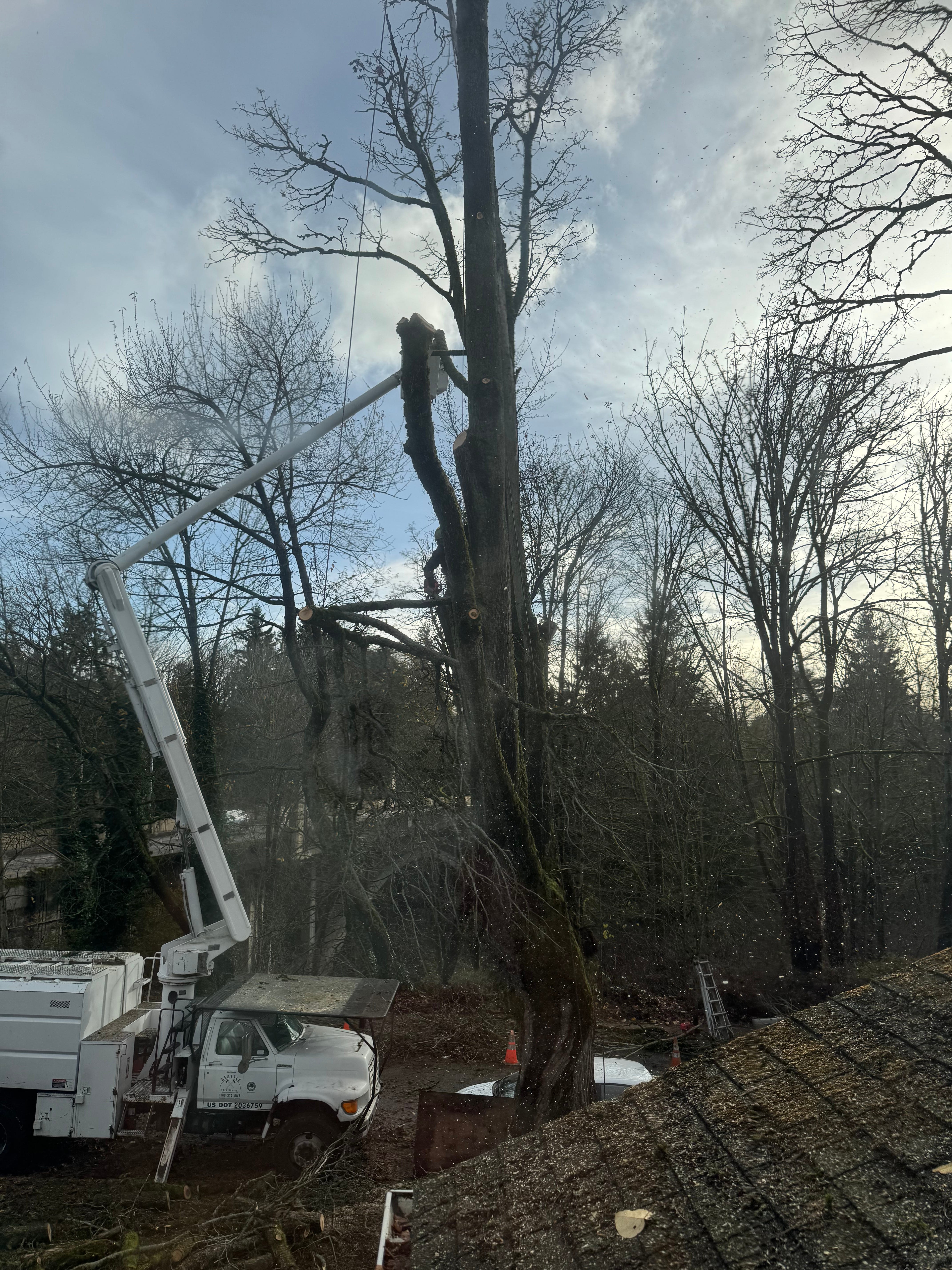
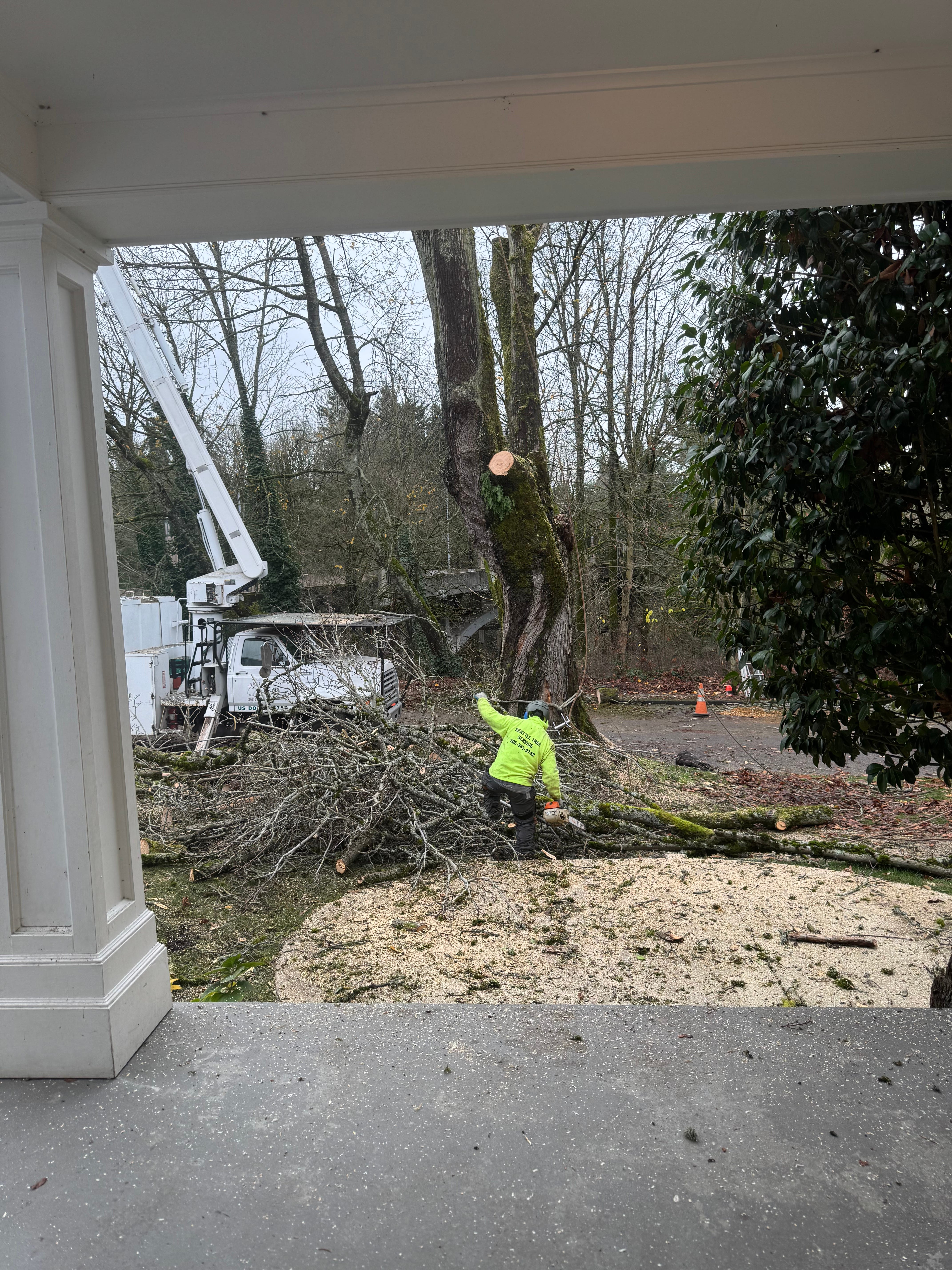
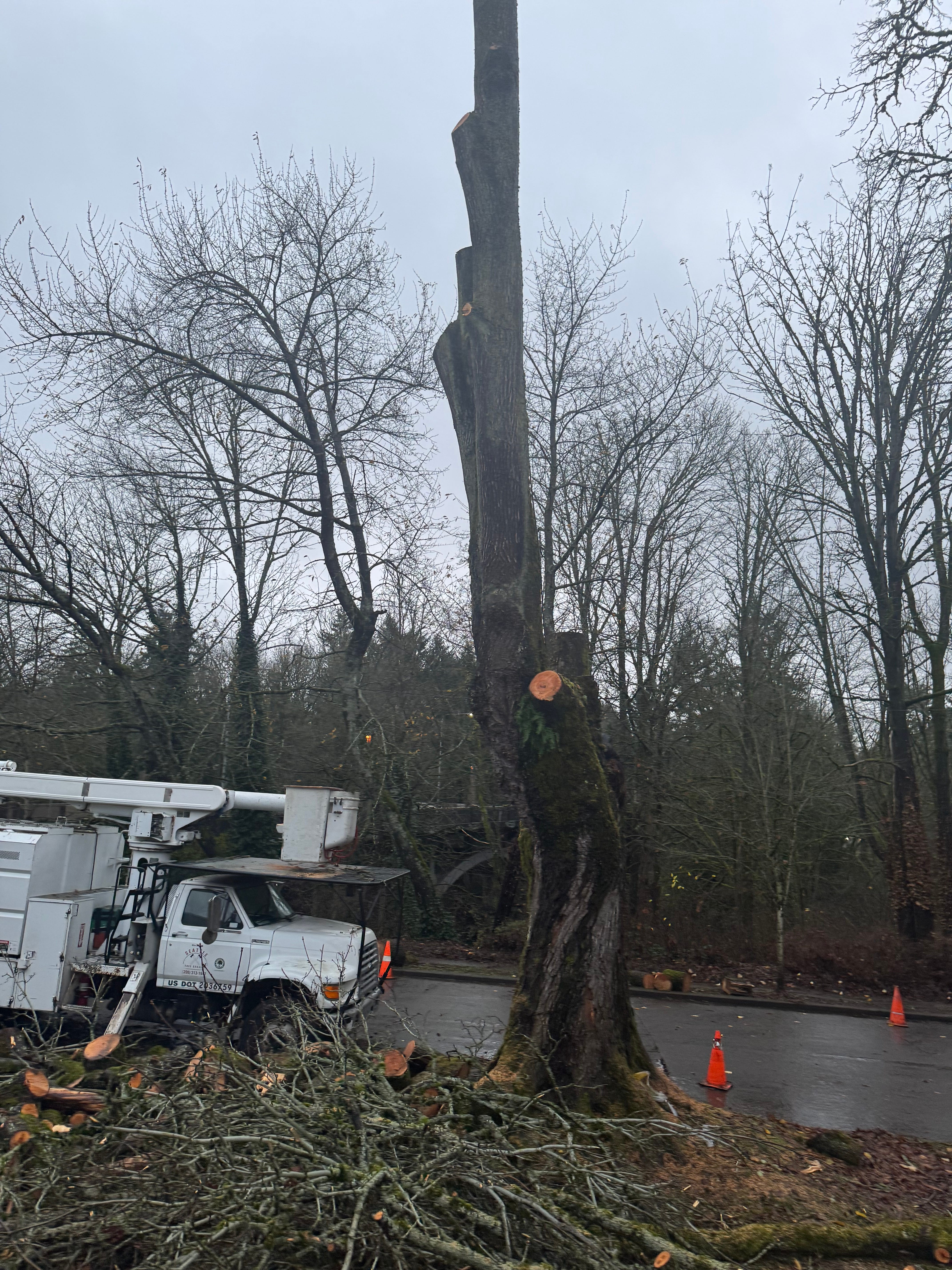
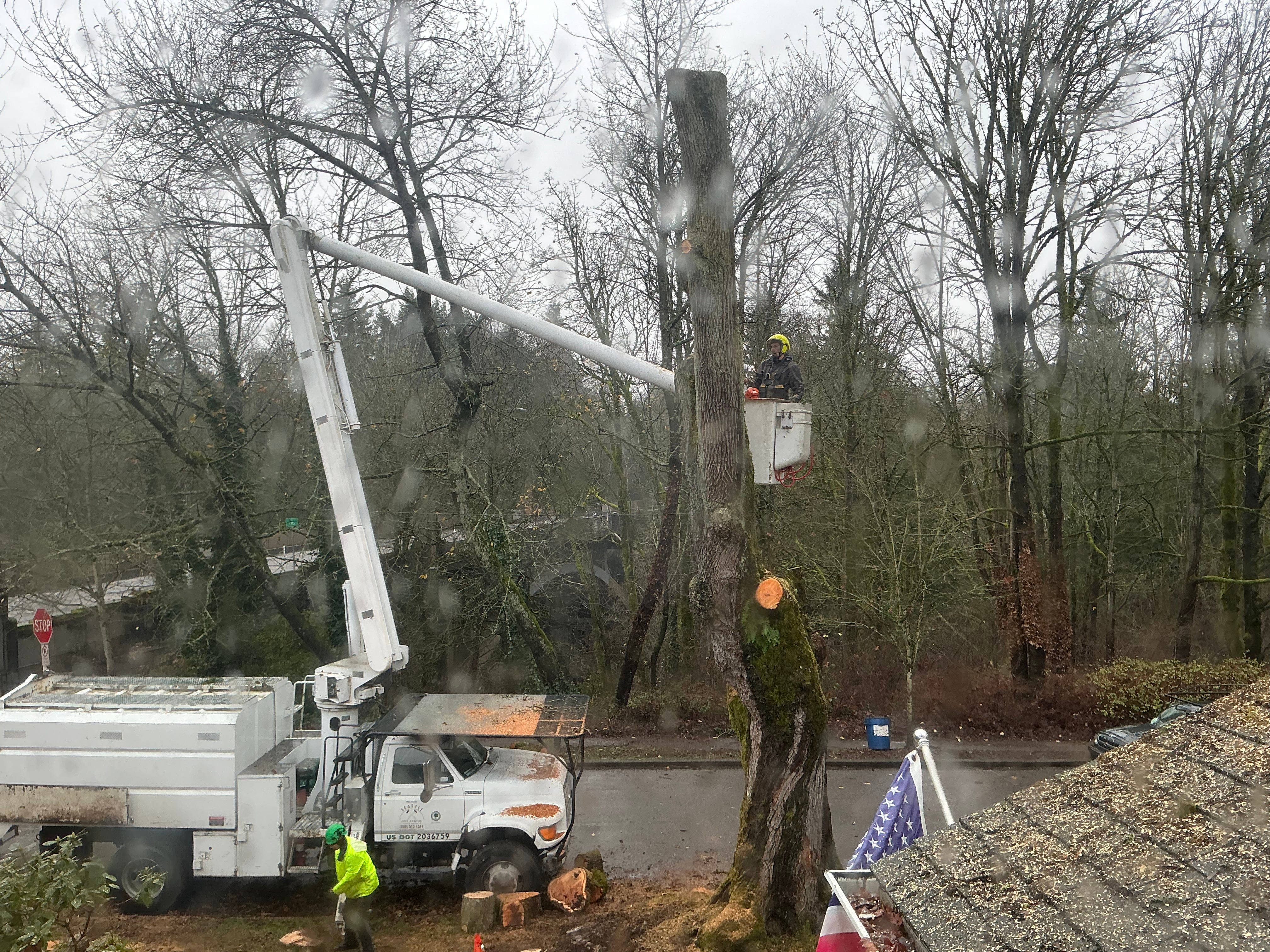
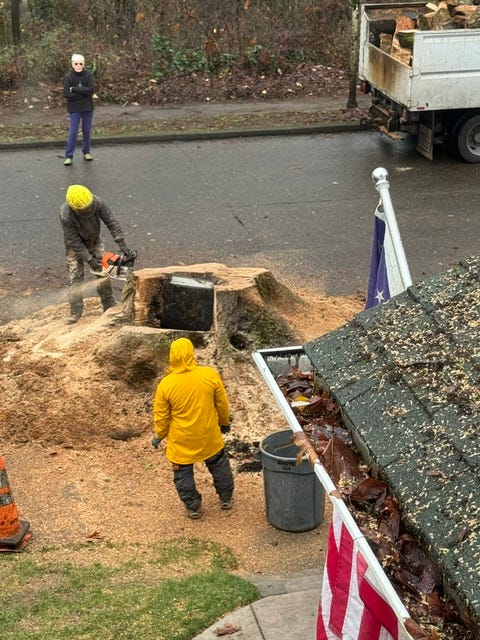
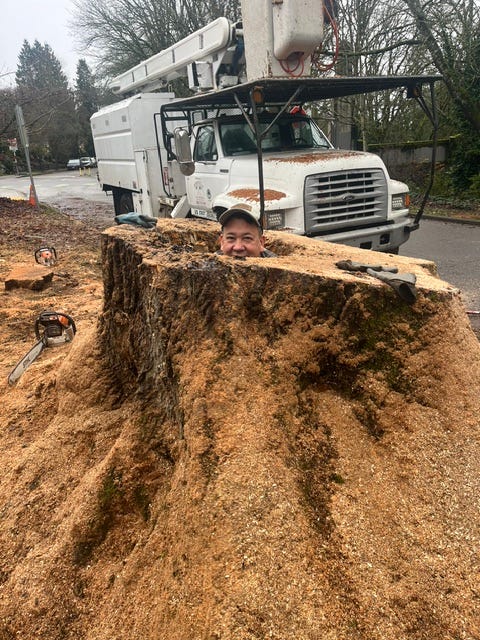
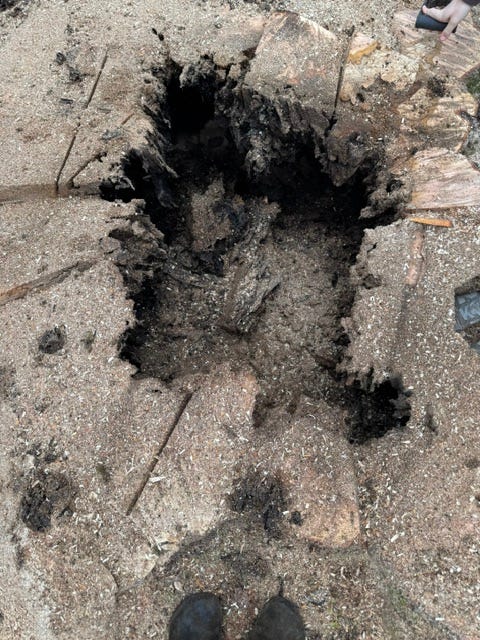
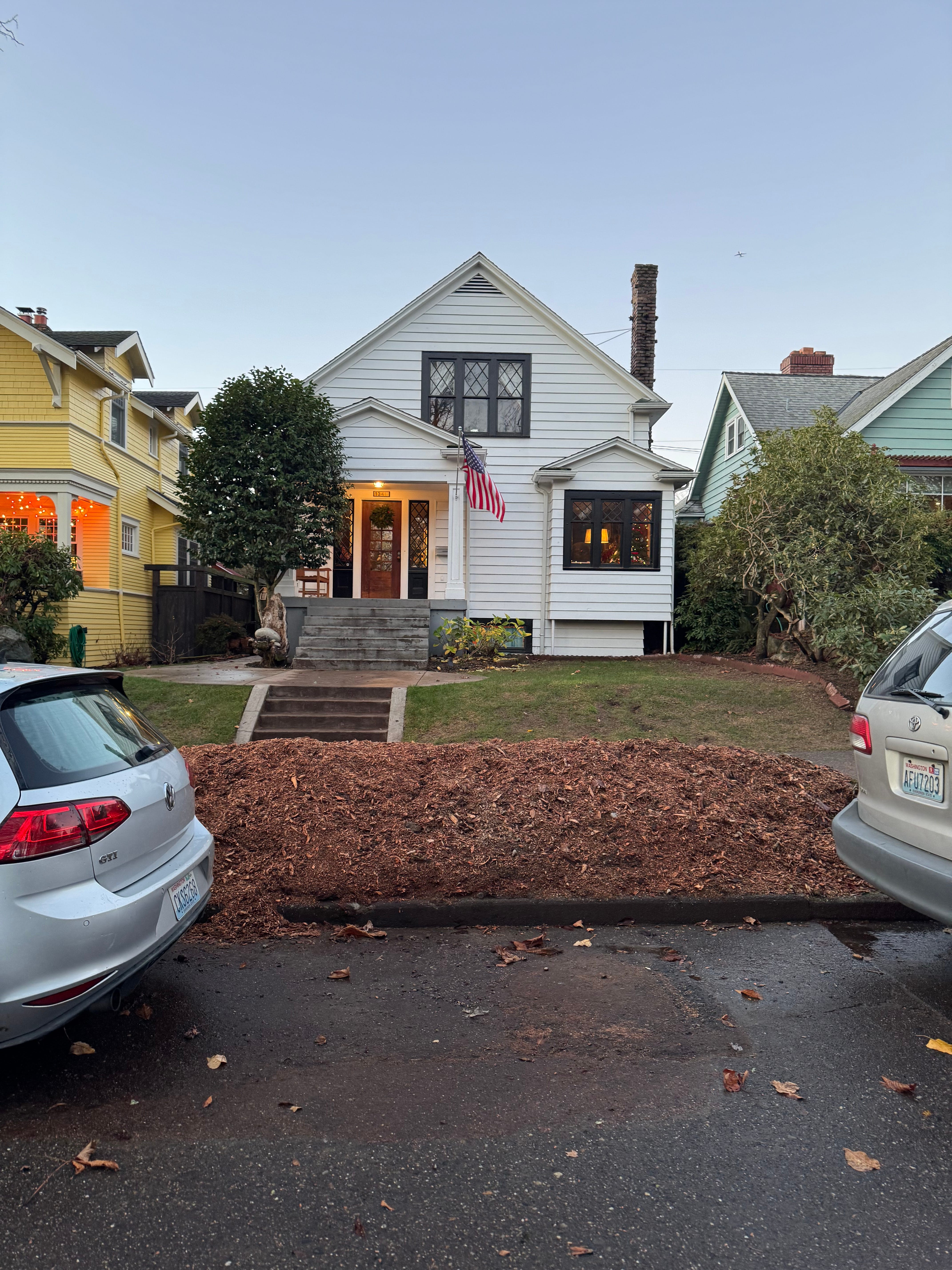
After unsuccessful pleas for reconsideration, our only real option was to remove the tree entirely. Fortunately, Mr. Stanton and Seattle Tree Services blessed us with their work at an incredible rate. After the whole ordeal with the city, it was fascinating to watch the arborists take down the tree over the course of three days. A detailed explanation wouldn’t do the process justice—and since a picture is worth a thousand words, below are photos documenting the entire process.
Keep at it
Do You Need a Permit? https://www.seattle.gov/sdci/permits/do-you-need-a-permit
“but my city was gone…”
signed former Green Lake Rat, Roosevelt class of ‘75